New CU Boulder research finds that the presence of clouds—or lack thereof—caused by the smoke of wildfires thousands of miles away can either help protect or endanger Arctic sea ice
Sea ice and wildfires may be more interconnected than previously thought, according to new research out today in Science Advances.
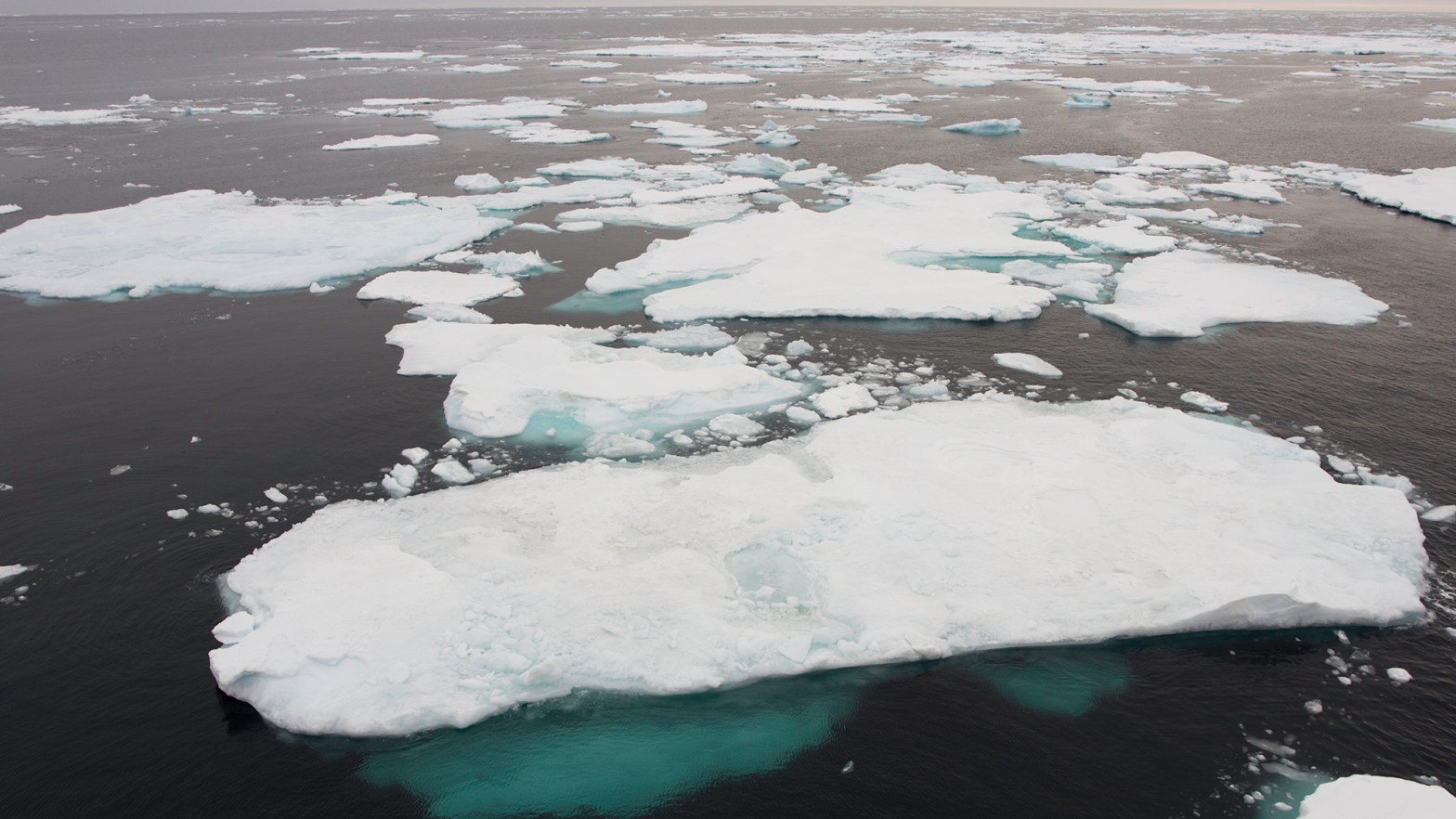
By digging into differences between climate models, researchers from the University of Colorado Boulder and the National Center for Atmospheric Research (NCAR) found that soot and other burned biomass from wildfires here in Colorado and elsewhere in the Northern Hemisphere can eventually make their way to the Arctic. Once there, it can affect how much—or how little—sea ice persists at any given time.
This, in turn, can cause ripple effects on climatic patterns for the rest of the globe, reinforcing a feedback loop between the two systems in a way that hasn’t been previously seen.
“This research found that particles emitted from wildfires where people live can really impact what happens in the Arctic thousands of miles away,” said Patricia DeRepentigny (PhDAtmos’21), the lead author on the paper and a postdoctoral fellow at NCAR.
“Sometimes the Arctic can be seen as this region that we shouldn’t care about because it’s so far away from where we live … but the fact that there’s this back-and-forth of what happens here with the wildfires can affect the sea ice, and a diminishing sea ice can then lead to more wildfires here, connects us with the Arctic a little bit more.”
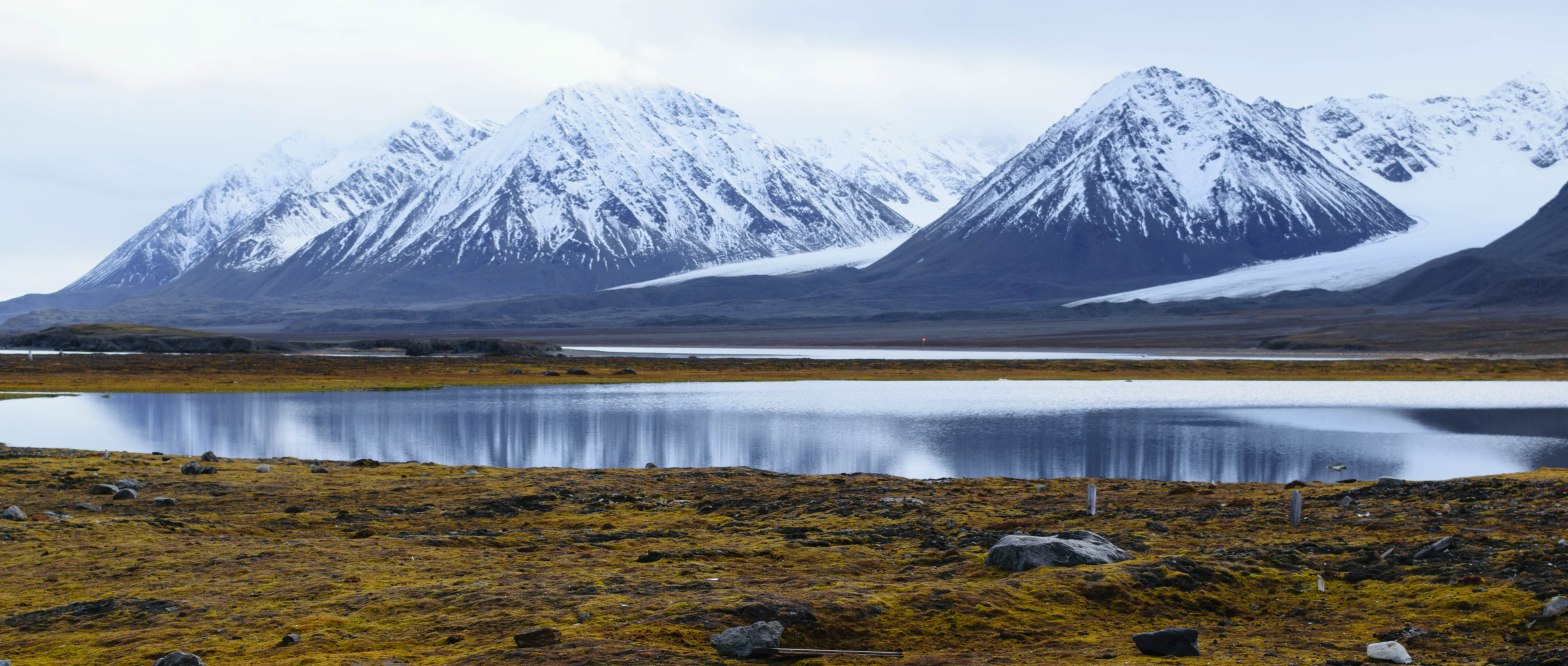
At the top of the page: This new research shows that Arctic sea ice (seen above) is more influenced by wildfire smoke than previously thought (Photo courtesy of Patricia DeRepentigny). Above: Patricia DeRepentigny (left) and Alexandra Jahn (right) designed the study.
Climate models, which are simulations of how different parts of the climate interact, have long been used by governments around the world to help guide future policies related to climate change. As science has become more advanced, so too have these models, gaining sophistication and capability.
However, while completing her PhD in atmospheric and oceanic sciences at CU Boulder, DeRepentigny and her advisor, Alexandra Jahn, noticed that in a recent model, the NCAR-based Community Earth System Model version 2 (CESM2), there was a drastic acceleration of Arctic sea ice loss towards the end of the 20th century that wasn’t seen in the previous models. So they decided to understand why.
What they found when comparing the forcings (the different ways a climate model can be influenced, such as carbon dioxide or methane emissions or solar radiation) between the new and previous generation of climate models was that biomass burning emissions had the biggest effect on Arctic sea ice loss when simulated.
When they dug deeper into why these biomass burning emissions mattered so much, they found that the main difference is due to the non-linear cloud effects that can emerge when aerosols, small particles or liquid droplets, released by fires interact with Arctic clouds. When there are a lot of aerosols released during a heavy fire year, it can lead to more and thicker clouds, whereas those clouds are thinner on lighter fire years—allowing for more solar radiation to get through and melt more ice.
Previous research had already shown that when the sea ice melts, large wildfires become more widespread over the western U.S. By showing that smoke from wildfires can help protect the ice, this new research suggests that this variability may be creating more of a feedback loop than previously thought.
“When we think about climate, everything’s really interconnected, and this is really a great example of that,” said Jahn, an author on this paper and an associate professor in atmospheric and oceanic sciences and the Institute of Arctic and Alpine Research (INSTAAR) at CU Boulder.
“When we’re thinking about climate processes, it’s really a global problem, and we can’t study it in any isolated fashion. We really always have to look at the global picture to understand all these different interactions.”
When we think about climate, everything’s really interconnected, and this is really a great example of that.
The researchers caution that this research was model-specific, which means that it only looked at one specific climate model, but that their experiments provide a great starting point for future research. This includes potentially pinpointing the effects of specific fires, rather than fires broadly speaking, and fine-tuning the models so that they can do simulations where the model itself can generate the fires; thus, if there’s predicted to be a dry year, the model could then simulate more fires, which in turn would factor into the projections for future sea ice loss.
“The goal that we’re trying to achieve here is to have these climate simulations be more reliable and give us projections that can then inform policy makers and societal choices,” DeRepentigny said, adding that this study “helps us get closer to something that can truly help us make the best decisions as a society.”
Other authors on the paper include Marika M. Holland, John Fasullo, Jean-François Lamarque, Cécile Hannay, David A. Bailey, Simone Tilmes and Michael J. Mills at the National Center for Atmospheric Research and Jennifer E. Kay and Andrew P. Barrett at CU Boulder.
Funding for this research was provided by NCAR; the National Science Foundation; Natural Sciences and Engineering Council of Canada; The Fonds de recherche du Que´bec – Nature et Technologies; and NASA.
As humans evolved and expanded, so too did barn swallows, new research from CU Boulder suggests
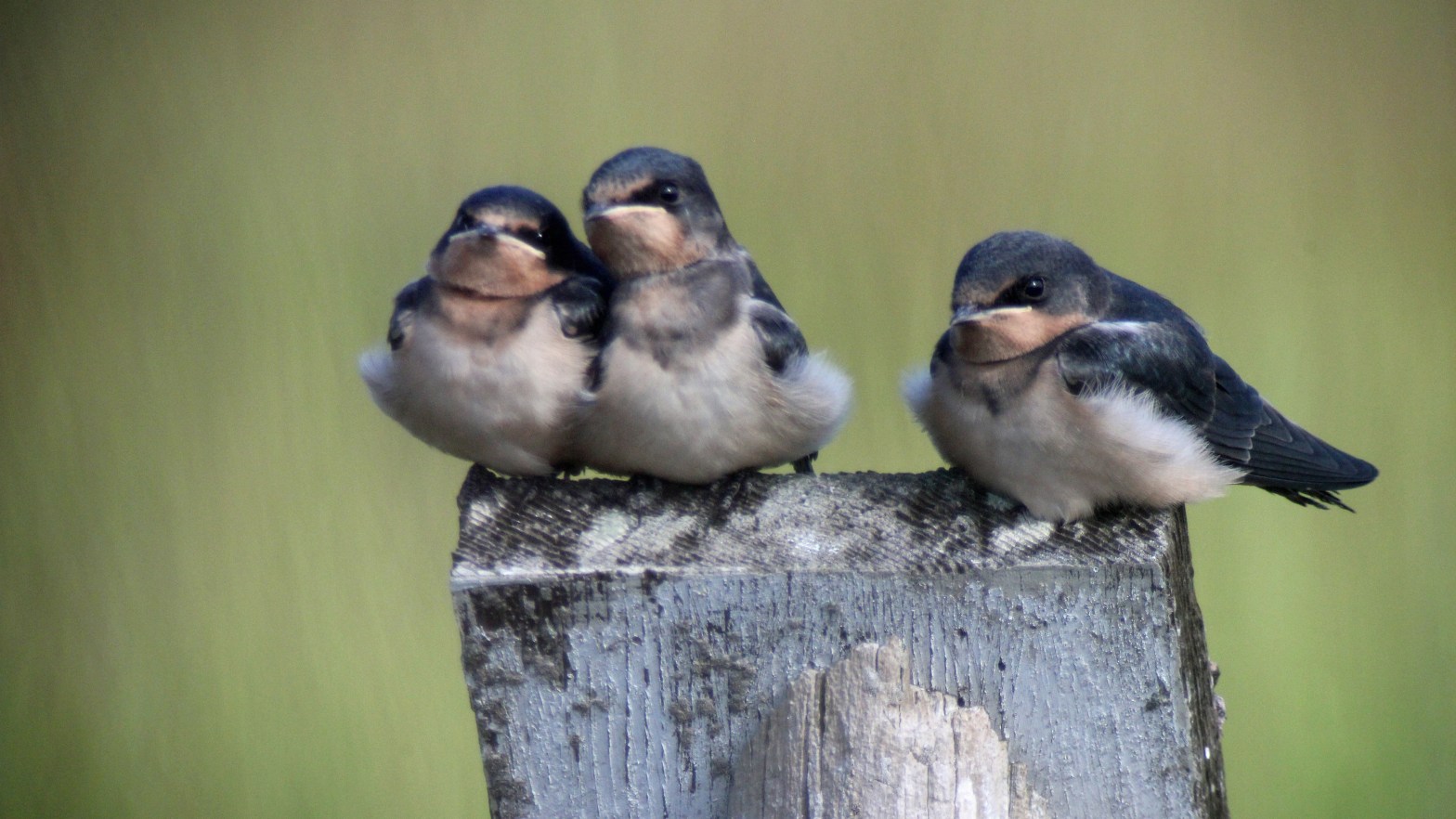
The evolution of barn swallows, a bird ubiquitous to bridges and sheds around the world, might be even more closely tied to humans than previously thought, according to new study from the University of Colorado Boulder.
The research, published this week in Molecular Ecology, offers preliminary insight suggesting that the barn swallow and its subspecies evolved alongside—but independently from—humans. These new results make it one of the only known species, in addition to microscopic organisms like bacteria or viruses, to have developed in such a way, upending previous assumptions that barn swallows evolved prior to human settlement.
“Humans could be a really big part of the story,” said Rebecca Safran, a co-author of the study and an ecology and evolutionary biology (EBIO) associate professor at CU Boulder. “There’s very few studies that can point to the exact influence of humans, and so here, this coincidence of human expansion and permanent settlement and the expansion of a group that relies really, really heavily on humans is compelling.”
Barn swallows are found across the northern hemisphere and are characterized by their mud-cup nests that are built nearly exclusively on human-made structures. Despite their prevalence, however, not much is known about their evolutionary history, the timing of their expansion from northern Africa (where they originated) or how the six subspecies evolved so physically and behaviorally different yet remain almost genetically identical.
Humans could be a really big part of the story. … There’s very few studies that can point to the exact influence of humans, and so here, this coincidence of human expansion and permanent settlement and the expansion of a group that relies really, really heavily on humans is compelling.
Rebecca Safran, ecology and evolutionary biology associate professor
This new study, however, gave the topic a fresh look by examining the whole genome of 168 barn swallows from the two sub-species farthest apart on an evolutionary scale: H. r. savignii in Egypt (a non-migratory species that lives along the Nile) and H. r. erythrogaster in North America (a species found throughout North America that migrates seasonally to South America).
These data—which are on the order of 100,000 times bigger than the previous dataset used—were then analyzed with more sophisticated computational resources and methods than previously available. This allowed researchers to get a more complete picture that places the timing of barn swallow differentiation or speciation (i.e., when the barn swallow subspecies separated) closer to that of when humans began to build structures and settlements.
“The previous studies were playing with the idea of potential impact on population sizes due to humans,” said Chris Smith, a graduate student in EBIO and the Interdisciplinary Quantitative Biology program, and the study’s lead author. “Our results suggest a much more substantial link with humans.”
These new preliminary findings also suggest that this evolutionary link may have been forged through a “founder event,” which is when a small number of individuals in a species take over a new environment and are able to expand their new population there thanks to an availability of resources and an absence of competitors. For barn swallows, this event may have occurred rapidly when they moved into a new, relatively empty environment: alongside humans.
“Everyone is always wondering how do you study speciation? It’s been viewed as this long-term, million-year (process), but in barn swallows, we are not talking about differentiation within several thousands of years,” said Safran. “Things are really unfolding rather rapidly.”
Smith concurred: “It’s interesting to study speciation in the beginning steps.”
As plant communities become more diverse and complex in the high alpine, so to do soil microorganisms, according to a new CU Boulder study
Increases in plant diversity and complexity above ground leads to a greater soil biodiversity below ground, according to new research from the University of Colorado Boulder.
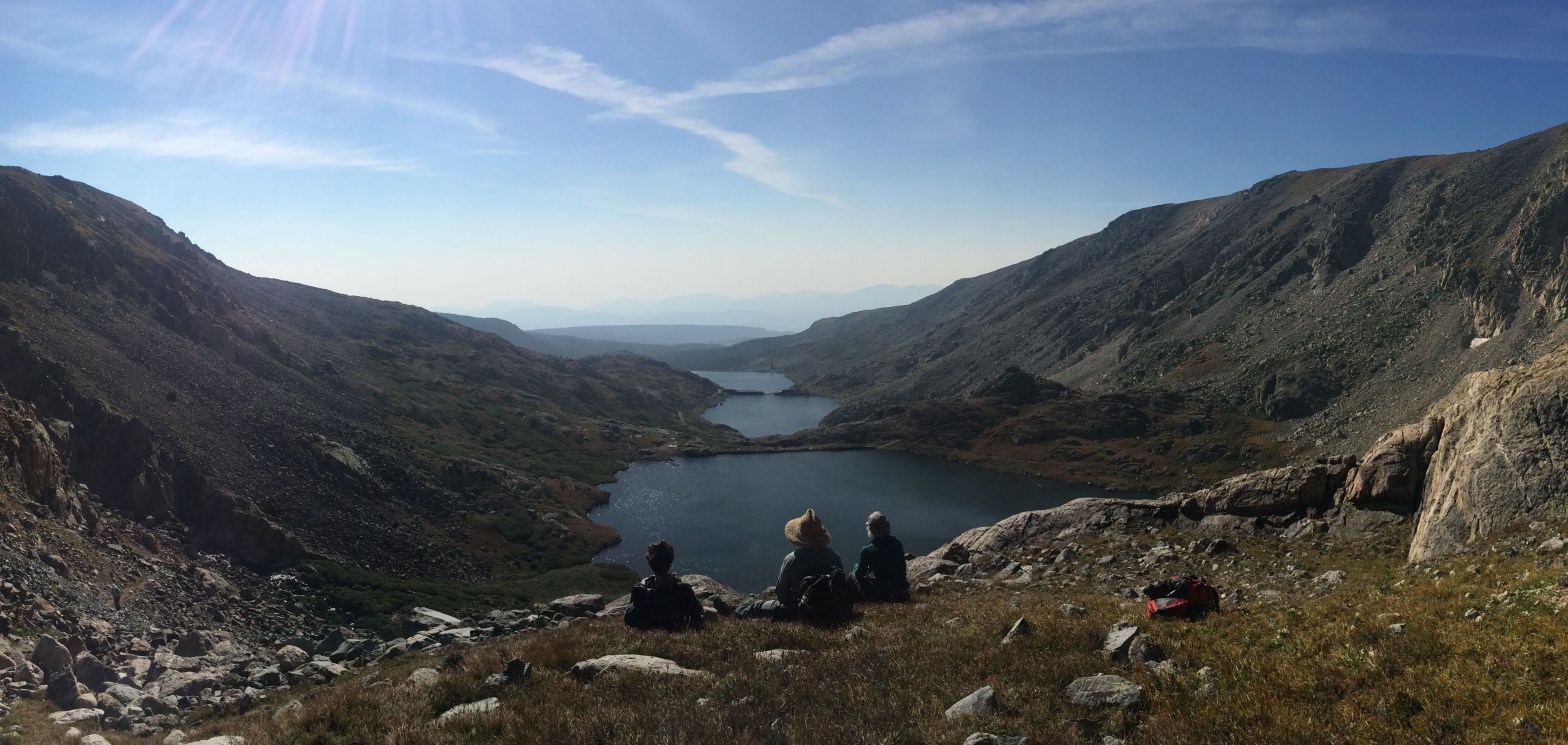
This study, which is out today in Ecology, looked to the high alpine environment of the Rocky Mountains, where plants are increasingly colonizing new territory due to climate change, and found that as plants move into these new environments, the soil diversity seems to move with them, documenting for the first time in the field this plant-soil diversity relationship.
“We are really excited that this system, being so simple, actually does show this connection,” said Dorota Porazinska, the lead author of the study and a research associate in the Department of Ecology and Evolutionary Biology at CU Boulder. “If there was a place where we would expect to see a relationship between the diversity of plants and microbes, that would be in this system. It’s a nice delivery that, yes, indeed, it’s present.”
It is well established that ecosystems, including plants and soil microbes depend on each other in much the same way as humans rely on their own internal microbiome for health and well-being. What is less known, however, is how the diversity of one affects the diversity of the other. While experimental results have suggested that there is indeed a connection, nothing solid had thus far been observed in nature.
This research, however, found otherwise by looking at an environmental blank slate: the high alpine of Colorado.
Diversity begetting diversity is something that hasn’t really been proven. … And these results really show that it is happening and that the relationship exists in nature, and not just in some laboratory experiments.
Steven Schmidt, Department of Ecology and Evolutionary Biology PROFESSOR
As the climate changes, high alpine environments in Colorado—those zones between 12,000 and 14,000 feet above sea level—have been experiencing significant environmental shifts. Where there were once only barren soils, there are now new mosses, lichens and plant communities fostered by a longer growing season.
For the study, the researchers collected a variety of plant and soil samples along a natural environmental gradient from such an environment in the Front Range of the Rocky Mountains. They then analyzed the soil microbiota (the organisms living within the soil), the carbon and nitrogen in the soil (required nutrients for plant growth) and the soil moisture to see if there were any relationship between the plants, soil diversity and the broader soil environment.
They found that, at least in this high alpine environment, there is a strong connection between plants moving in and the soil undergoing complex changes in response.
“Diversity begetting diversity is something that hasn’t really been proven,” said Steven Schmidt, a co-author and a professor in the Department of Ecology and Evolutionary Biology. “And these results really show that it is happening and that the relationship exists in nature, and not just in some laboratory experiments.”
The WiRē team—a group of wildfire practitioners and researchers, including some from the University of Colorado Boulder—is working across Colorado to better understand the human role in local wildfire mitigation
For the community of Mountain Village in southwestern Colorado, it was all about the trees.
Anything that involved cutting down trees was a non-starter for this picturesque community near Telluride, according to the town council’s understanding at the time. Residents just weren’t willing to get rid of them, they argued, even to reduce wildfire risk. A group of researchers and wildfire practitioners—or the Wildfire Research (WiRē) team—however, saw this challenge as an opportunity to do things a little bit different.
The team—which includes sociologists, economists and wildfire mitigation specialists (or wildfire practitioners) with ties both to the University of Colorado Boulder and federal agencies throughout Colorado—surveyed local residents and quickly disproved the conventional wisdom. In fact, 77 percent of Mountain Village respondents reported being willing to remove their trees to reduce wildfire risk and help protect their homes.
With data in hand, a member of the WiRē team and the director of a regional wildfire organization, Lilia Falk (Geog’10) of the West Region Wildfire Council, went to the town council and showed them that not only were a majority of respondents willing to remove trees to reduce wildfire risk, but that they felt there were both perceived barriers and distinct motivations for completing this work.
Mountain Village, much like other mountain communities throughout Colorado, was struggling to reconcile two apparently competing goals: making itself safer from wildfire while also preserving the beauty that draws many of its residents. And it is this tension, that while wildfire is a natural phenomenon, learning to live with wildfire is social—and social solutions are also needed to save lives and property—that the WiRē team hopes to address.
“As a nation, we’re spending a lot of time, money and resources suppressing fires—especially fires that threaten homes and communities. But the human condition is such that humans choose to build in those areas. Humans choose. So, just the concept that, yes, it is a hazardous fuels issue, yes, it is a structure issue, but its first and foremost a social issue that needs to be addressed,” said Falk.
Yes, it is a hazardous fuels issue. Yes, it is a structure issue. But its first and foremost a social issue that needs to be addressed.
Lilia Falk
Learning how to not only prepare for wildfires, but also live alongside them, is a difficult task, and one that the WiRē team hopes to help residents living in the wildland-urban interface—the transitional area between vegetation and homes—overcome through a combination of social science research and on-the-ground work, all to create more wildfire adapted communities.
They accomplish this through the systematic collection of household data via surveys. The team then pairs those data with parcel-by-parcel wildfire risk assessments, which are completed by professional wildfire mitigation specialists. From there, the team’s researchers analyze the findings and generate reports about the community and their relationship to wildfire, including residents’ risk perception, wildfire experience and their opinions of wildfire and mitigation work.
These reports, and the data within them, are then used by the team to craft useful products for the practitioners, including presentations, infographics and story synopses to help facilitate community conversations, and help expand the social science literature around wildfire adaptation and mitigation.
The collaboration, though, doesn’t end there. The researchers and practitioners use this as a jumping off point, continuing to work together to figure out how they can fine tune their research questions and create new programs aimed at improving wildfire preparedness.
Thus far, the team has collected data from roughly 80 communities across Colorado and has garnered about 6,000 risk assessment observations, predominantly in southwest and southcentral Colorado, with no plans of stopping.
One way they’re expanding their work is by creating the WiRē Center—a non-profit outgrowth of the team. The center looks to help garner resources to further the goals of the group and to support more research-practitioner partnerships across Colorado and beyond.
This multi-faceted approach is especially important as wildfires grow in size and intensity, and more people move into the wildland-urban interface.
Wildfires are usually approached in the United States with a focus on mitigation (attempting to reduce the damage or risk of wildfires), and suppression (putting a fire out when it does occur). Homeowners and landowners are often encouraged to take care of their own property to reduce wildfire risk, but often they lack the specific information concerning how to do it, or to what extent they need to take action.
And often, according to Hannah Brenkert-Smith (PhD, Soc’08) of the WiRē team, wildfire management policies try to be a one-size-fits-all approach, which doesn’t necessarily work.
“A common limitation we see is not that homeowners don’t know their homes are at risk of wildfire—they’re often quite aware of that in a general sense—but where some of the information disconnect comes in is that people don’t necessarily know the specifics,” said James Meldrum (PhD, EnvSt’12), a research economist with the U.S. Geological Survey who is a member of the WiRē team, and, formerly, a research associate with the CU Boulder’s Institute of Behavioral Science. “They might be taking action such as creating defensible space around their home, but they might not be doing it to the level that the practitioner would want them to be doing, or that would be as effective as it could be.”
“We’re seeing that providing that information really makes a difference.”
Beyond just a lack of information, another barrier to mitigation efforts is the sheer initial cost of the endeavor. Research shows, however, that for every dollar invested in mitigation before a big wildfire disaster, society saves $4 in suppression costs when the wildfire burns.
“We believe that if more investment happens in the upfront side of things, supporting community risk reduction, that we can reduce impacts in local communities from major wildfires,” said Brenkert-Smith, an environmental sociologist and research faculty with the Environment and Society program at the Institute of Behavioral Science. “But at this point in time, the machine to respond to fires is so big and so hungry that there are few dollars left to put on this front-end piece.”
“And so, what we’re trying to do is create a way—a systematic way—of investing dollars so that when wildfire programs and practices are underway, that they’re efficient, they’re tracking what works, and they’re responding to the local context.”
One way that the WiRē team is attempting to create this systematic approach differently is by incorporating wildfire practitioners into their work and research from the very beginning of the process.
The practitioners work directly with homeowners to make sure that they’re informed, their homes are safe, and that any potential destruction on their homes or property is mitigated. These mitigation efforts include creating defensible space (or the buffer between a home and the forest around it), hardening a home (adding building materials that are more fire resistant), and introducing fire-resistant landscaping. But, they can also include outreach and working with the community directly.
Historically, practitioners have worked in their own silos, separate from the research conducted on mitigation and suppression. What the WiRē team provides is a different, data-driven, people-driven approach that improves efficiency.
And the partnership between the researchers and practitioners is something that both groups appreciate.
For the West Region Wildfire Council, a nonprofit group that works with the WiRē team in Gunnison, Hinsdale, Delta, Montrose, Ouray and San Miguel counties, that has definitely been the case.
“Having that information provided by the WiRē approach has absolutely been critical to the evolution and efficacy of our programs,” said Falk, who is also a member of the WiRē team. “We’ve been able to infuse that information into our programs, think critically, modify and change over time.”
That appreciation holds true for the researchers as well: “It’s really been pretty inspiring working with the practitioners so closely,” said Meldrum. “It’s been a pretty incredible opportunity to be able to work with such forward thinking and innovative people who very much care about the problem. Everyone really does give 110 percent.”
This innovative approach, and how well it has worked, has spurred the group to get the message out for other potential researcher-practitioner partnerships, and one way they are doing that is through newly released outreach videos on their website. The videos each emphasize a different aspect of the WiRē team and WiRē Center’s collaborative approach to the social side of wildfire.
The first video, “An Innovative Approach to Understanding Communities,” introduces the WiRē team, and provides an overview of how they’re helping communities adapt.
“Something that we really tried to emphasize in these videos is the process of understanding a community in detail and working to see how to use that understanding to improve the engagement of the community in becoming more fire adapted,” said Meldrum.
“We hope these videos can convey that message and encourage other places to take this approach.”
Brenkert-Smith agrees, “Our intent really was to tell people our story about how research and practice don’t have to live in separate worlds, and how we’ve managed to join together in a collaborative effort that really challenges the way things usually get done.”
“And part of this is try to say, ‘We have something. It’s real. It’s working.'”
The WiRē Center and team are looking to expand beyond just their current areas to Grand County, Colo., and central Washington.
“We directly have data on 80 communities right now, and that’s growing,” commented Brenkert-Smith.
“It’s really exciting because the practitioners that we’ve been working with, and even those we’ve just had conversations with, lament that sometimes they steer their programs to respond to the vocal community members who have really strong opinions about how things should be done or shouldn’t be done. But, what we’ve learned is that sometimes those voices don’t actually represent the majority of the people in their communities.”
“So, there’s a feeling that things can change because of this process.”
Questions remain about the respiratory risk posed to a fifth of the United States population by increasing wildfires—but a CU Boulder researcher is trying to clear the air
It had already been an exceptional fire season across the American West by the time Montana’s Rice Ridge fire ignited.
It began in July 2017 as many western wildfires do: with a dry lightning strike on a parched patch of plant litter. Immediately it stirred an inferno that stretched for miles and, by September, consumed an area of forest almost twice the size of Denver, producing enough thick smoke to choke half of the country.
“It’s been described to me in apocalyptic terms,” Sarah Coefield, an air quality specialist with the Missoula City-County Health Department, told the Washington Post at the time about the area surrounding the fire.
The orange plumes of ash were so dense that Coefield commented in that same interview that, “Visibility has been down to less than a block.”
Miles away from Montana, that same thick, orange haze, accompanied by the ash of other wildfires in California, Oregon and Washington, heaved its way across the rolling hills of the Midwestern tallgrass prairies—and they weren’t alone in their suffocation.
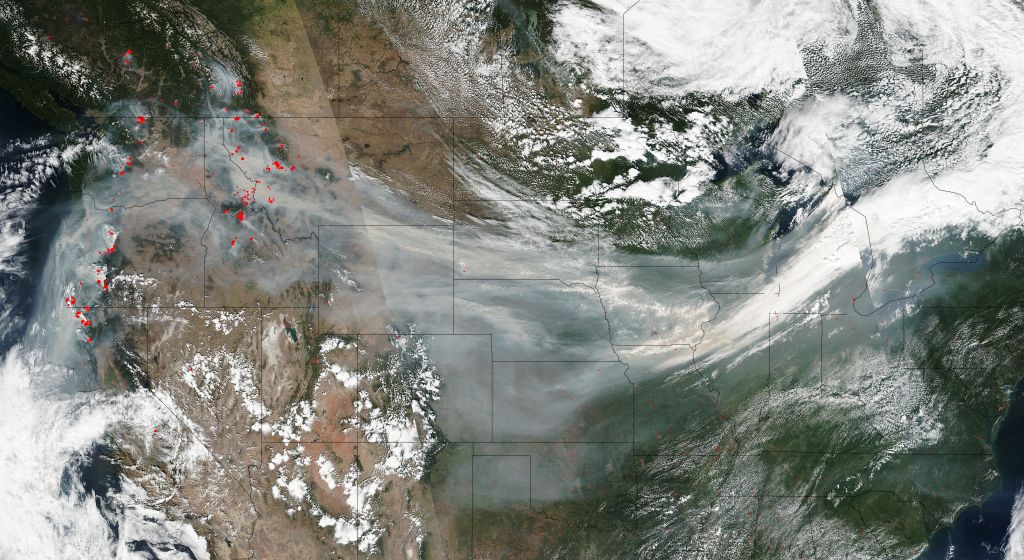
Before all was said and done, this smoke—accumulated from dozens of wildfires—had hijacked the meandering jet stream, getting a first-class ticket to blanket more than 3,000 miles of middle America. It ultimately traveled as far east as New York and Pennsylvania and as far south as Texas, and illustrated yet another example of a new normal for those in and out of the Smoke Belt.
At the smoke’s peak, its plume spread over 3,000 miles across the United States. Photo courtesy of NASA.
Wildfire smoke—like wildfire itself—is becoming more common and more powerful due to a changing climate, affecting communities from California to the Pacific Northwest, and from the Pacific Ocean east to the Great Plains. And yet, the documented public health effects of smoke remain relatively unknown, and, for what does exist in the research, inconsistent with a few important exceptions.
But a researcher at the University of Colorado Boulder seeks to change that, particularly for those distant fires that share their smoke.
“When we think about all of the things in the future that might be changing that influence wildfire risk and health impacts, there’s so many things,” said Colleen Reid, an assistant professor of geography at CU Boulder who studies the impact of wildfire smoke on public health. “You can’t keep fire at bay.”
The difficulty in discerning the health effects of smoke stems from the very nature of the plumes, and the U.S. approach to tracking it. Currently, there are air pollution monitors set up by the Environmental Protection Agency across the United States—often near metropolitan areas—with the goal of assessing whether air pollution regulations are working. These monitors, however, don’t always measure every day, meaning that if the wildfire is moving fast or the smoke is only hovering temporarily, they could miss the data from the high levels of smoke altogether.
Reid, though, approached this problem from three perspectives in order to improve understanding of the potential health impacts: She conducted a critical review of all existing literature on the public health impacts of wildfire smoke exposure, she researched the birth weight of babies whose mothers were exposed to smoke while pregnant, and then she specifically examined the 2008 California wildfires and their corresponding respiratory health effects for downwind populations.
At the time, the 2008 California wildfires were one of the largest fire events in the state’s history. Ignited by more than 6,000 lightning strikes, this fire event consisted of thousands of blazes raging across 26 counties in the northern half of the state.
As structures and trees burned, fine particulate matter—or the incredibly small, easily inhalable solid and liquid particles suspended in the air during a high pollution event—coated the state.
These particles—or what makes the “haze” of wildfires—aren’t just the remains of burned trees. They can also be the debris particles of human products like plastics, electrical wires and spray foam insulation, or anything else that may have gotten in the fire’s path. And, while just one of the many hazards that accompany wildfires and air pollution more broadly, it is in many respects the most dangerous for human health.
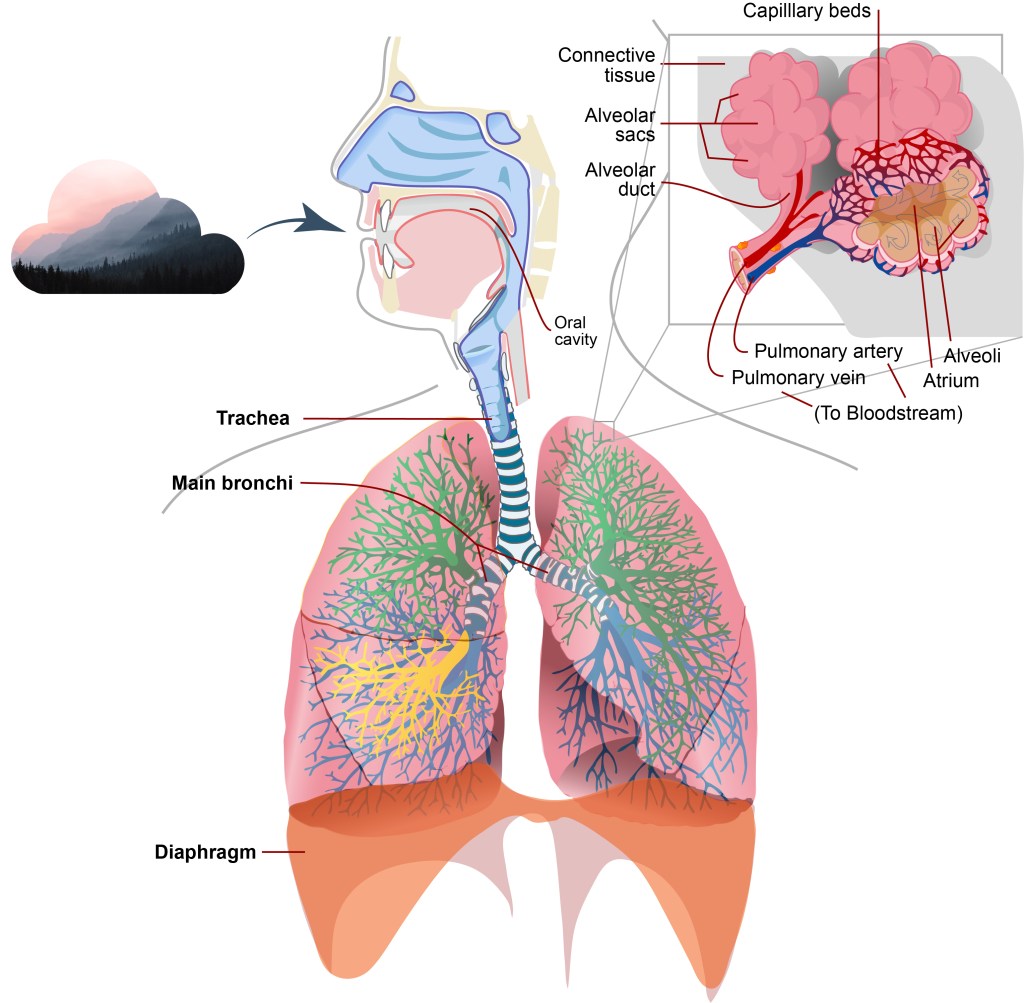
Particulate Matter is often measured in two forms: Particulate Matter 2.5 (PM2.5) and Particulate Matter 10 (PM10). PM2.5 are the fine inhalable particles that measure particles that are roughly 2.5 micrometers or smaller, while PM10 are roughly 10 micrometers and smaller. These particles—which are roughly the length of an E. coli bacterium and a single fog, mist or cloud water droplet, respectively—are so small that they can easily penetrate the lung’s alveolar sacs, which are partly responsible for exchanging oxygen between the lungs and the blood stream, and corrode its walls.
In other words, they are able to bypass all of the body’s defenses, going straight into the blood.
Given this effect on the body, the World Health Organization has recommended that there be no minimum threshold where humans are safe to breathe in particulate matter from human-caused air pollution, which has been linked to 25 percent of lung cancer deaths, 8 percent of chronic obstructive pulmonary disease (COPD) deaths and 15 percent of heart disease and stroke cases.
And the effects don’t stop there. While sensitive populations—the young, the old, the sick—are much more vulnerable, even perfectly healthy people can feel the impact of high particulate matter through irritation to the lungs, eyes and skin, an increased risk of respiratory tract diseases and cardiovascular diseases, reduced lung function, the development of an irregular heartbeat, nonfatal heart attacks, and even premature death.
With wildfire smoke, there is a widespread consensus among researchers that these plumes do exacerbate respiratory diseases such as asthma and COPD and can cause an increased risk of death for sensitive populations, but in terms of the other effects, there is still a lack of agreement—particularly for those impacted downwind.
Right now, the EPA has the daily limit of all pollution related to fine particulate matter (PM2.5) set at 35 µg/m3 (micrograms per meters cubed). Ideally, with good clean air, the levels would be below 12 µg/m3. But, even at 35 µg/m3, most people (with the exception of sensitive populations) may not notice any sort of change or difficulty to their breathing.
“The fire that I studied, it (the particulate matter) maxed out close to 300 µg/m3. The Napa fires that were just happening… there were values in the 400s. So, it’s really, really bad,” said Reid. “Even San Francisco and Oakland were getting levels that were in the high 100s, low 200s, and that’s an area that tends to have pretty good air quality. So, it’s much higher than they’re used to.”
For Montana, much like California, this was the summer of smoke, with Seeley Lake—near where the Rice Ridge fire took place—experiencing record levels of smoke at 18 times what the EPA deems safe, and even breaking the air monitoring device for five hours because the pollution was simply higher than the device’s limit.
Despite this, the Front Range, and Colorado more broadly, was relatively clear and quiet. For most of the summer, the PM2.5 levels stayed within the healthy limit (normally between 0 and 20 µg/m3), well below the EPA’s limit. When Montana’s smoke begun its thick descent into the Denver metro, though, the levels spiked to between 40 and 50 µg/m3. Boulder’s jump was even more impressive, getting above 50 µg/m3 for the week of exposure.
During that time, health officials at National Jewish Health in Denver told the Denver Post that they had seen an uptick in patients reporting a shortness of breath and coughing episodes, as well as Prednisone prescriptions—all of which are common during high air pollution events, called “Action Days,” along the Front Range.
The possible health effects from those exposed during these Action Days—which are issued by the Colorado Department of Public Health & Environment for any number of air pollution issues, including any days with high particulate matter—are complicated, just like any issue related to public health.
“Severity is more related to the severity of the underlying disease than to the intensity of the exposure,” said Karin Pacheco, an allergist at National Jewish Health and an assistant professor in environmental and occupational health at the University of Colorado Denver.
We’re always going to have wildfires in the West. … So, we need to figure out how to protect health.
Colleen Reid, assistant professor of geography, CU Boulder
Similar to how healthy individuals can have differing reactions to differing levels, those among the sensitive populations—and particularly children who breathe much faster and are much more susceptible—can also have different reactions despite the original source of the pollution.
“It all is equally as horrible for the lungs,” said Lauren Massie, an undergraduate student at CU Boulder in English who suffered from severe, childhood asthma, and still suffers complications if the air pollution is too bad. “I still need to take precautions.”
Those recommended precautions to avoid the pollution, outlined by the CDC, tend to revolve around avoiding particulate matter in particular. They suggest, first and foremost, to check local air quality reports and visibility guides (which can be an indicator as to the level of particulates in the air). And, if there is anything, to stay indoors.
“Unfortunately, keeping safe on high smoke days means avoiding exposure,” commented Pacheco.
Even inside, there are a number of steps that can be taken to keep the air clear, including keeping the fresh-air intake closed, avoiding any activities that might increase indoor pollution (such as using your fireplace or burning any candles) and keeping your HVAC air filter clean.
While thus far there have been no long-term health impacts linked to smoke exposure (like what has been seen with other high-particulate matter events), the reality is that there just isn’t enough information or research yet. And, with the length of the wildfire season projected to triple, and hit closer than ever to major urban corridors due to human interference, a public health crisis of toxic air may be looming for the western United States.
Researchers, including Reid, are working on documenting these health effects for those downwind by improving the literature and watching different fire events closely, but the work is slow, expensive and extensive—and, she said, important.
“We’re always going to have wildfires in the West,” acknowledged Reid. “So, we need to figure out how to protect health.”
Content Warnings: Forced captivity, death reference.
— Tristan —
SIX WEEKS AFTER
May 1993
When I was a child, I used to dream of a man.
Not just any man. This one was familiar and terrifying, draped in black shadows like someone might wear clothes, the wisps ebbing and flowing from his body with a life of their own. And yet, even though I could never make out the features of his face, I’d never forget his bright red eyes, which glowed like little flames.
Similar red eyes shined all around me from my dark prison, catching what little light existed as it filtered from cracks, snuck behind newspaper peeling from glass. The day must be ending—that was the only time the others awoke, if you could call them “awake.” Conscious would probably be closer. In this place of nightmares, each day spun in colors, sounds, sensations like a dizzying cacophony of noise, edges unraveling, the next fuzzier than the last.
How long had it been since I tried to escape to the world beyond these walls? I frowned. It hadn’t worked—but I could try again. There was no reason I couldn’t.
I pushed myself from the wall and stumbled on weak legs, my knees slamming into the concrete floors. I sucked in my breath, stars blotting my vision.
Oh yeah, that was right. That was why I hadn’t tried.
I leaned forward, my hands curling in grime. I couldn’t reach the door out. My body was too fragile, too drained without Vivienne’s blood. Too close to death.
Death.
Tears spilled from my eyes, droplets mixing with muck on the floor. I curled in on myself. This couldn’t be it. If I died here… Jessica… No, I needed to do something. The world beyond these walls couldn’t be one that existed only in my memories and dreams, like that man.
I had forgotten about the shadow man, who would follow me through dream-worlds, never saying a word. I’d simply glimpse him in the recesses of the imaginary world, waiting—always waiting. But for what, I never knew.
At some point I decided the figure was the devil.
But that only lasted until I realized that, despite what I had been told, the devil wasn’t real.
La Repubblica di Fiorenze, Italia • Aprile 1462 Anno Domini
There was something about weddings that Francesca absolutely abhorred, even if the celebration in question was her own.
It wasn’t the large amount of money or resources spent on what would be a brief affair—that was fine; at least it accomplished something, namely making a statement to the city’s other guilds. No, what she hated was the fakeness of it, all performative gestures and barely disguised greed as people practically clung to shoes, or in this case her dress on the dance floor.
Chest heaving, Francesca slipped from between the bodies the moment the pluck of the lute, beat of the tambourine, stopped. No one turned, caught up in laughter and the dimpled smiles freely given by the man in the center, Dionisio. He pushed his light brown hair from his eyes, glazed over by wine, and Francesca’s shoulders relaxed. Good.
She had better things to do than stay here a moment longer.
A stray black strand of her own hair, free from the twisty concoction of pearls and braids on the top of her head, stuck to her forehead, slick with sweat. No one gave her any mind as she lifted her heavy navy-blue dress rimmed in gold and edged away from the dancers to the onlookers in the back. Her bejeweled fingers brushed those of a man with droopy chestnut curls, so much like Dionisio but with a face full of youth. Alessandro.
The silver of the knife glinted in the hotel’s low light.
I shook my head, mouth dry, and scooted away, dew soaking through my sweat and dirt-encrusted skinny jeans.
All of the other guests had long since vanished back to their rooms—like I should have. But no, I just had to get involved. How utterly stupid of me. I swallowed, throat bobbing, unsure whether this person before me truly existed or if they were yet another delusion rattled to life by the persistent drum of my sleep-deprived brain. Mud squelched beneath the person’s sneakers, though, as they stepped closer, separating me from the inside of the hotel, from safety.
“Please, don’t do this,” I pleaded. My voice, meant to be firm, was brittle, like it could be shattered with the slightest of taps. They didn’t answer; the knife’s blade, specked with dried blood, quaking ever-so-slightly.
I wished I could see better, make out their obscured form from behind the auburn strands of hair that had worked their way loose from my ponytail. Instead, they seemed spun from the dark, unnatural fog swirling around us. What was certain was the hesitation—a delay that I could use. I flung myself to my feet and ran past, my ragged Vans slipping in the wet grass.
Something heavy hit the back of my skull and I fell forward with a bang, head slamming down hard. I blinked a few times, bright white stars dotting my vision.
“Not yet,” they said, and I clenched my eyes shut, hating how much I recognized the voice. I hesitantly turned to the familiar curves of that face, the shine of their blond hair.
Thank you all for your interest in my work! For those just tuning in, my name is Cay Leytham and I’m a science communicator, specializing in topics related to risk and uncertainty. However, I’ve recently had two life updates that I want to update you all with.
First, I accepted a position as the Director of Communications for the Graduate School at the University of Colorado Boulder in January, 2023. That means I’m unfortunately moving away from writing about science topics for the time being and more towards strategic communications work. That said, I plan to update this website every Sunday with pieces that I’ve written over the last five years that I’m especially proud of.
Second, one topic that I haven’t delved into here is that I’m also a fiction writer, specializing in genre fiction (horror, fantasy and thriller). After some deliberation, I decided it was time to reflect that work here. I’ll also be adding snippets and updates as I have them, categorizing them as “fiction.” Eventually I plan to create a newsletter, but that is still very much a work in progress and won’t be a thing that comes about any time soon. If you are interested in receiving it once it is live, please fill out this Google form and I’ll get you on my mailing list.
Thank you for bearing with me as these changes happen! If you have any questions, definitely feel free to reach out to me at cay.leytham@gmail.com and I’ll do my best to respond.
Marijuana may not be as damaging to the brain as previously thought, according to new research from the University of Colorado Boulder and the CU Change Lab.
The research, which was published in the journal Addiction, examined the brains of more than 1,000 participants of varying ages, and found that long-term alcohol use is much more damaging to the brain than marijuana, contradicting years of research into the effects of marijuana and other cannabinoid products on the brain.
These findings, and other conclusions suggesting the potential public health benefits of marijuana, come amid the recent back-and-forth on federal marijuana policy and the nation’s opioid crisis.
Yet scientists are still hesitant to say that cannabinoid usage, specifically as it pertains to marijuana and its associated products, is beneficial.
“Particularly with marijuana use, there is still so much that we don’t know about how it impacts the brain,” said Rachel Thayer, a graduate student in clinical psychology at CU Boulder and the lead author of the study. “Research is still very limited in terms of whether marijuana use is harmful, or beneficial, to the brain.”
While the negative effects of alcohol on the brain have been known by researchers for years, it has been assumed that cannabinoids are as damaging to long-term brain health—if not more—given the immediate psychoactive effects of the THC (the chemical that gets a person high) in marijuana.
However, this may not necessarily be true.
With alcohol, we’ve known it’s bad for the brain for decades. But for cannabis, we know so little.
“When you look at the research much more closely, you see that a lot of it is probably not accurate,” said study co-author Kent Hutchison, a professor of behavioral neuroscience at CU Boulder and co-director of the CU Change Lab, which explores the factors linked with health and risk behavior.
“When you look at these studies going back years, you see that one study will report that marijuana use is related to a reduction in the volume of the hippocampus. The next study then comes around, and they say that marijuana use is related to changes in the cerebellum or the whatever.”
“The point is that there’s no consistency across all of these studies in terms of the actual brain structures.”
To combat this misconception in the existing literature, the researchers gave a fresh look at some existing neurological imaging data from the MRIs of both adolescents and adults to see how, using the same variables and controls, the influence of cannabinoids on the brain compared to or contrasted with alcohol.
“With alcohol, we’ve known it’s bad for the brain for decades,” said Hutchison. “But for cannabis, we know so little.”
To see any potential difference, the researchers used the data to examine the most important neurological components: gray matter and white matter.
Gray and white matter are the two main types of tissue that make up the brain and central nervous system. Gray matter is the “stuff”—the cell bodies, dendrites and axon terminals—that enable functionality. White matter, then, is how the grey matter communicates between clusters. Any loss of size or integrity in either can make the brain not work quite like it should.
The study found that alcohol use was significantly associated with a decrease in gray matter size and white matter integrity, particularly for adults who may have decades of exposure. Marijuana and associated cannabinoid products, on the other hand, were not shown to have any long-term impact on the amount of gray matter in the brain or on the integrity of the white matter.
The research demonstrated that, “while marijuana may also have some negative consequences, it definitely is nowhere near the negative consequences of alcohol,” according to Hutchison.
Despite marijuana not being as harmful as once thought, and definitely not as damaging as other legal and illegal products, the research has not yet proved any possible benefits. This is particularly the case as it relates to the different products on the market (both THC and non-THC-containing cannabinoid products), their usage with pain and addiction treatment and the effect on different ages—especially as cannabinoid usage is on the rise among older populations.
“Considering how much is happening in the real world with the legalization movement, we still have a lot of work to do,” Hutchison said.





 Cay Leytham-Powell